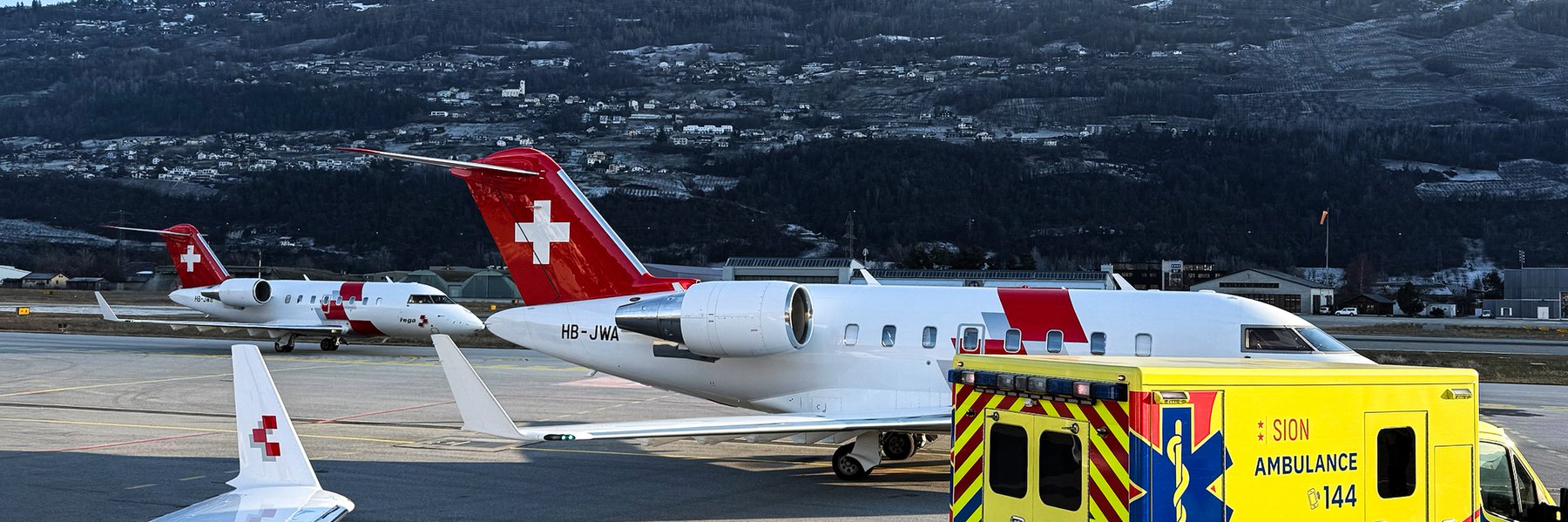
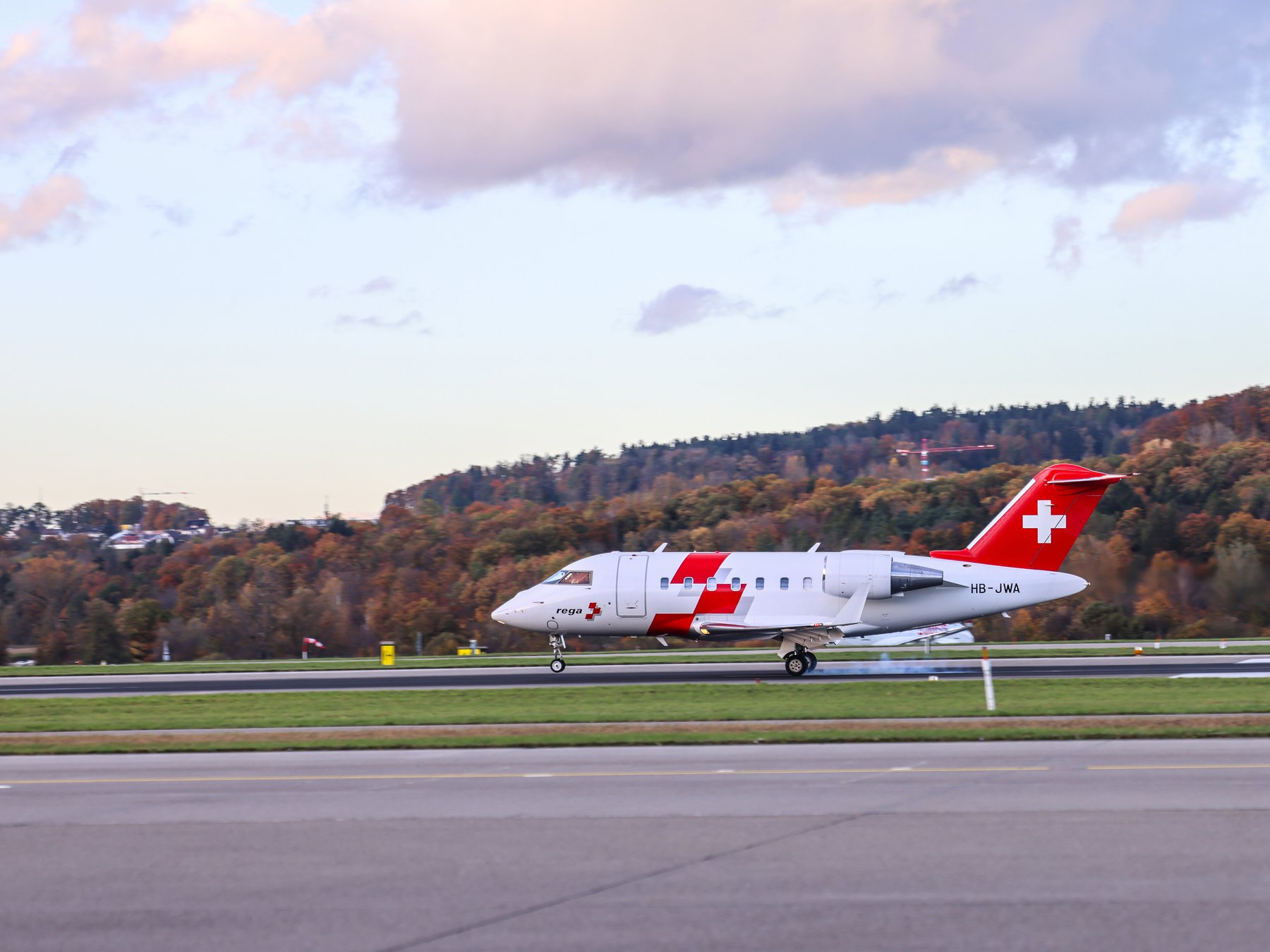
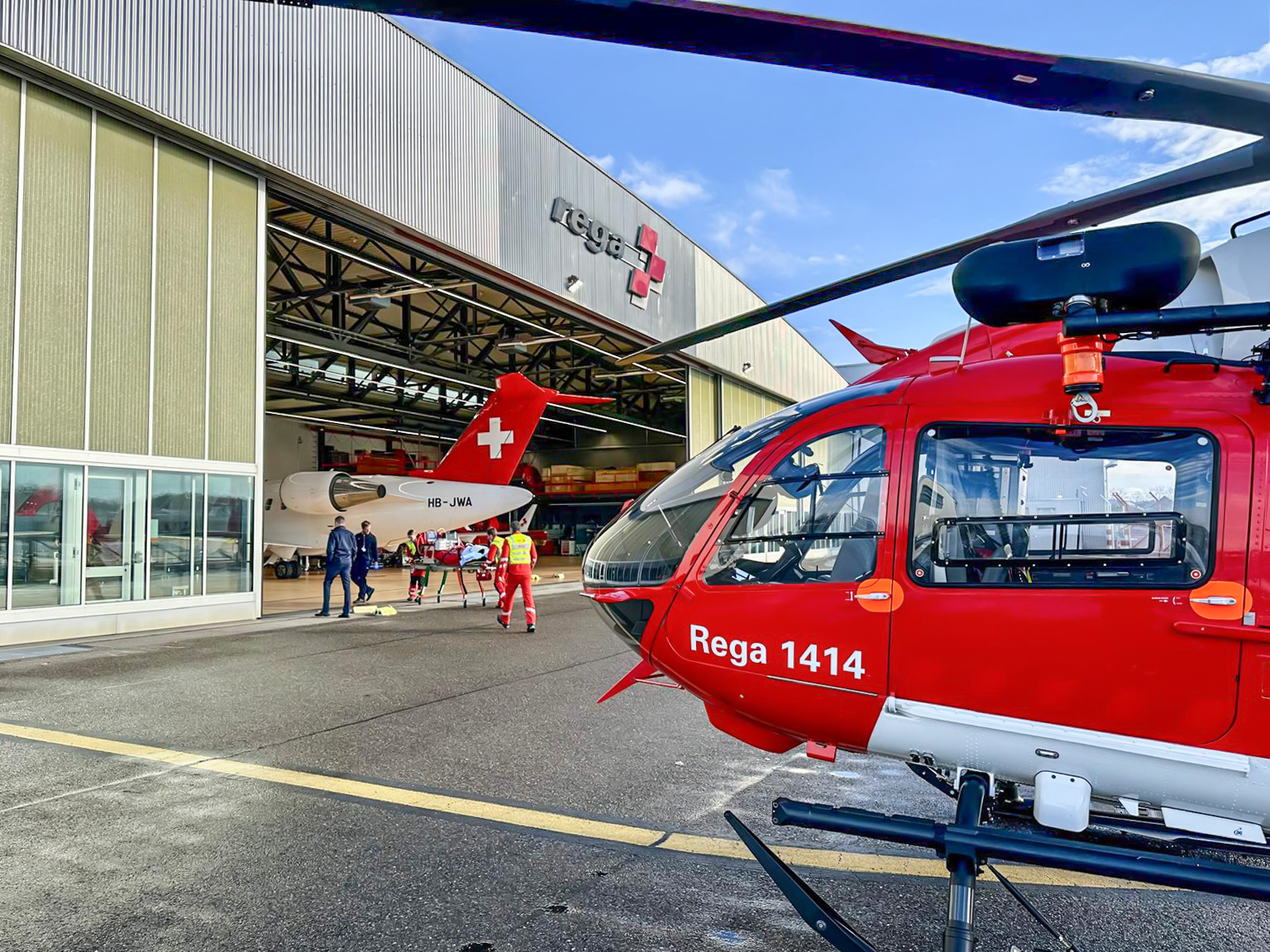
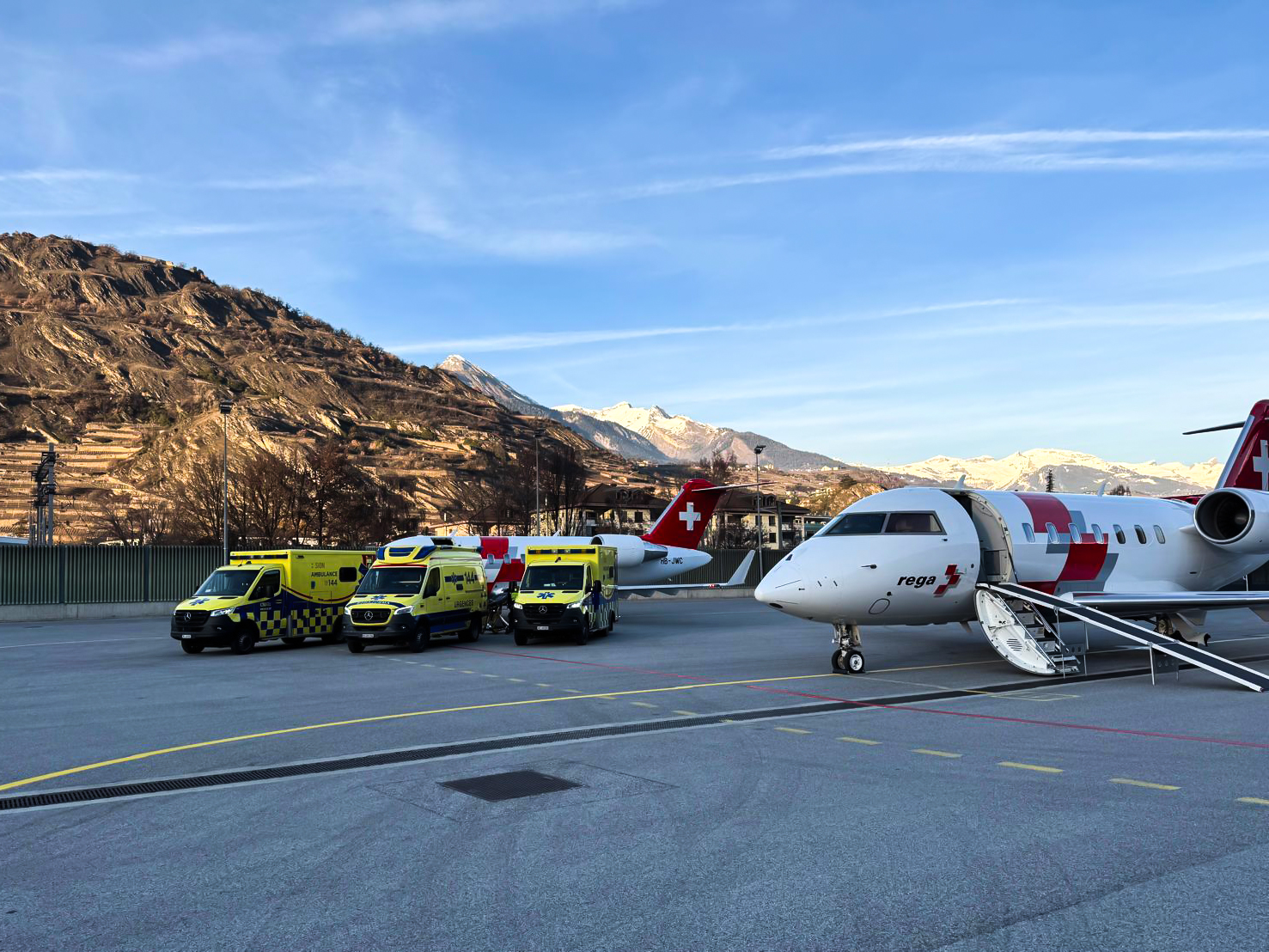
Just a few hours after the incident, the first Rega jet departed towards Sion in the early morning of New Year’s Day. Later that day, four more flights transferred several patients to suitably equipped intensive care wards in Switzerland and other countries.
Transfers to central hospitals and specialised burn care centres
Transfer flights on all three Rega ambulance jets continued on the second and third day after the accident. On 2 January, five patients were flown to specialised burn care centres in Belgium. Another ambulance jet transferred a patient to Germany. On 3 January, seven seriously injured patients were flown to Luxembourg, France and Belgium. The medical emergency transfer flights were organised in close consultation with the Federal Office for Civil Protection (FOCP). After all the injured persons had received initial medical care in Swiss hospitals, their further treatment, which may take months, will be continued in highly specialised clinics in other European countries, owing to the limited capacity in Switzerland.
These transfer flights in a Rega jet are demanding in both operational and staff-related terms, owing to the types of injury. Each patient was accompanied by a specialised medical team comprising an intensive care nurse and a flight physician in order to ensure optimum medical care during the flight. Owing to their physical condition, numerous injured persons were flown directly by rescue helicopter from the hospital that provided the initial care to the ambulance jet.
Further patient transfers by rescue helicopter
In addition to the ambulance jet flights, the Rega crews transferred other patients by rescue helicopter, for example from the Geneva University Hospital to Metz (France), from the hospital in Visp to Sion and from the Inselspital in Bern to the University Hospital in Zurich. During the night of New Year's Eve and in the morning hours of New Year’s Day, eight Rega helicopters were operating, and some of them flew several missions. The cooperation between Rega, the authorities in Valais, regional rescue services, other air rescue organisations and hospitals was efficient, well-coordinated and geared to the wellbeing of the patients.
Central coordination of intensive-care beds
Rega’s flight coordinators have been organising transfers by rescue helicopter and ambulance jet without interruption since New Year’s Eve and are supporting the hospitals in distributing patients to available intensive-care beds in Switzerland and abroad.